KiT
The KiT is an 8-bit computer I’ve been building since 2022, starting from Ben Eater’s 6502 breadboard kit. The current version, the KiT 2, has a 65C02 CPU at 1.8432 MHz, 24 KB of RAM, a USB serial port, a graphics card, a 256 KB flash drive, a SID sound card, and an ESP32-based WiFi card.
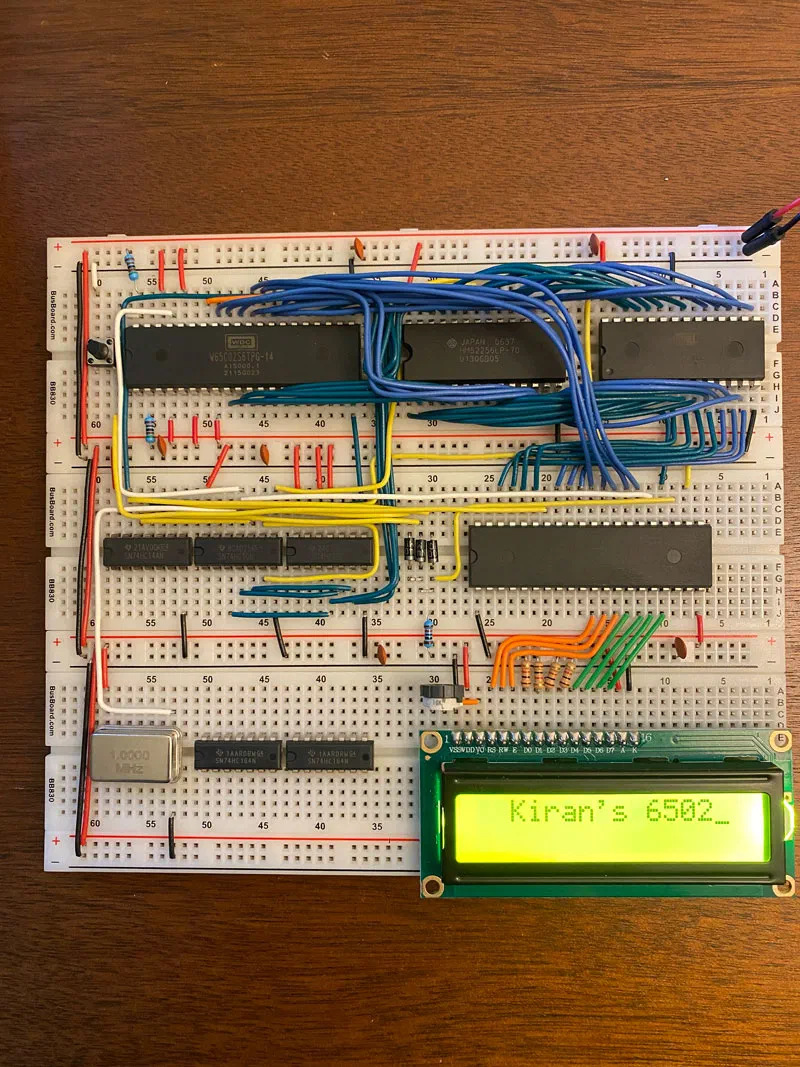
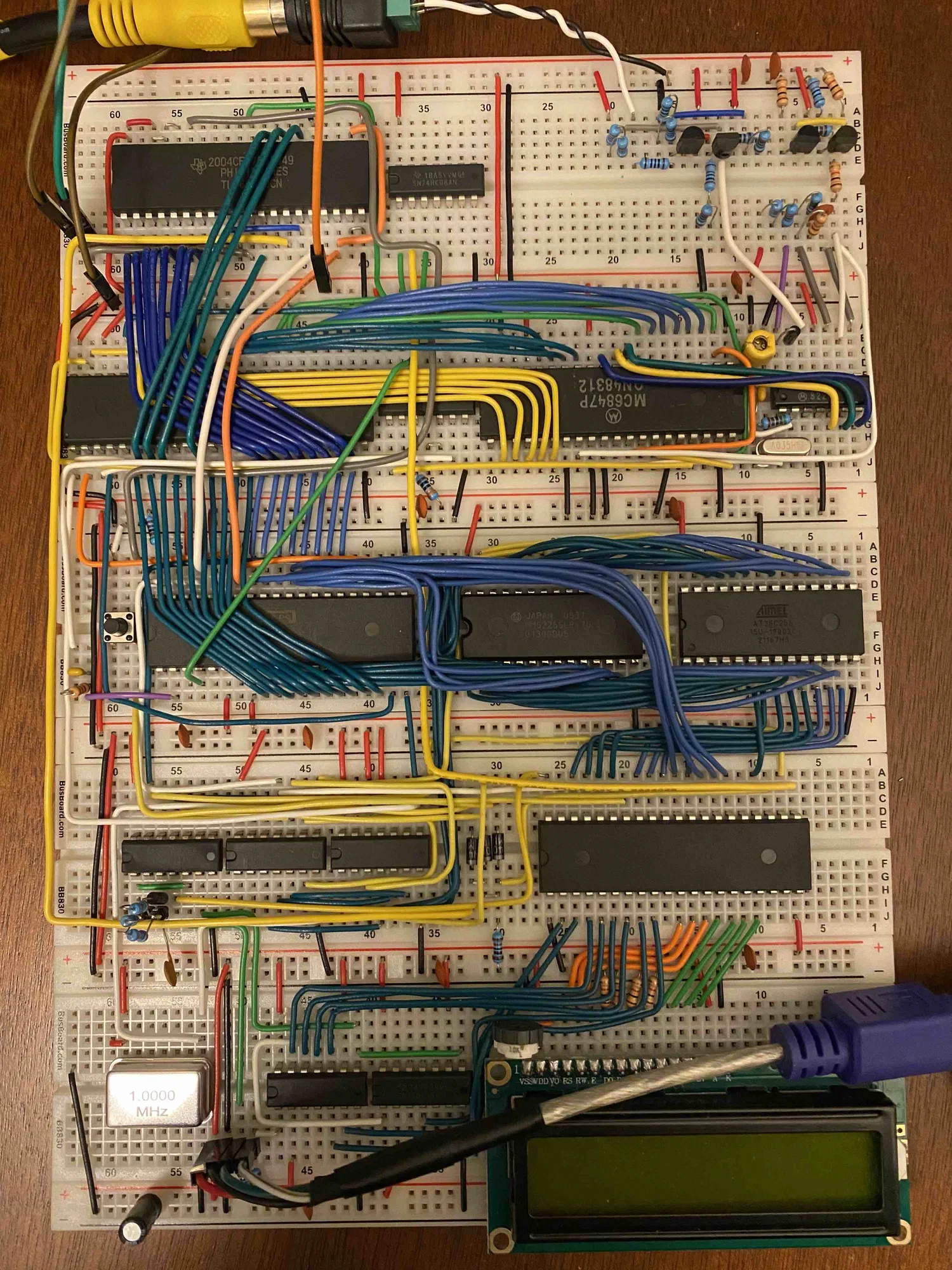
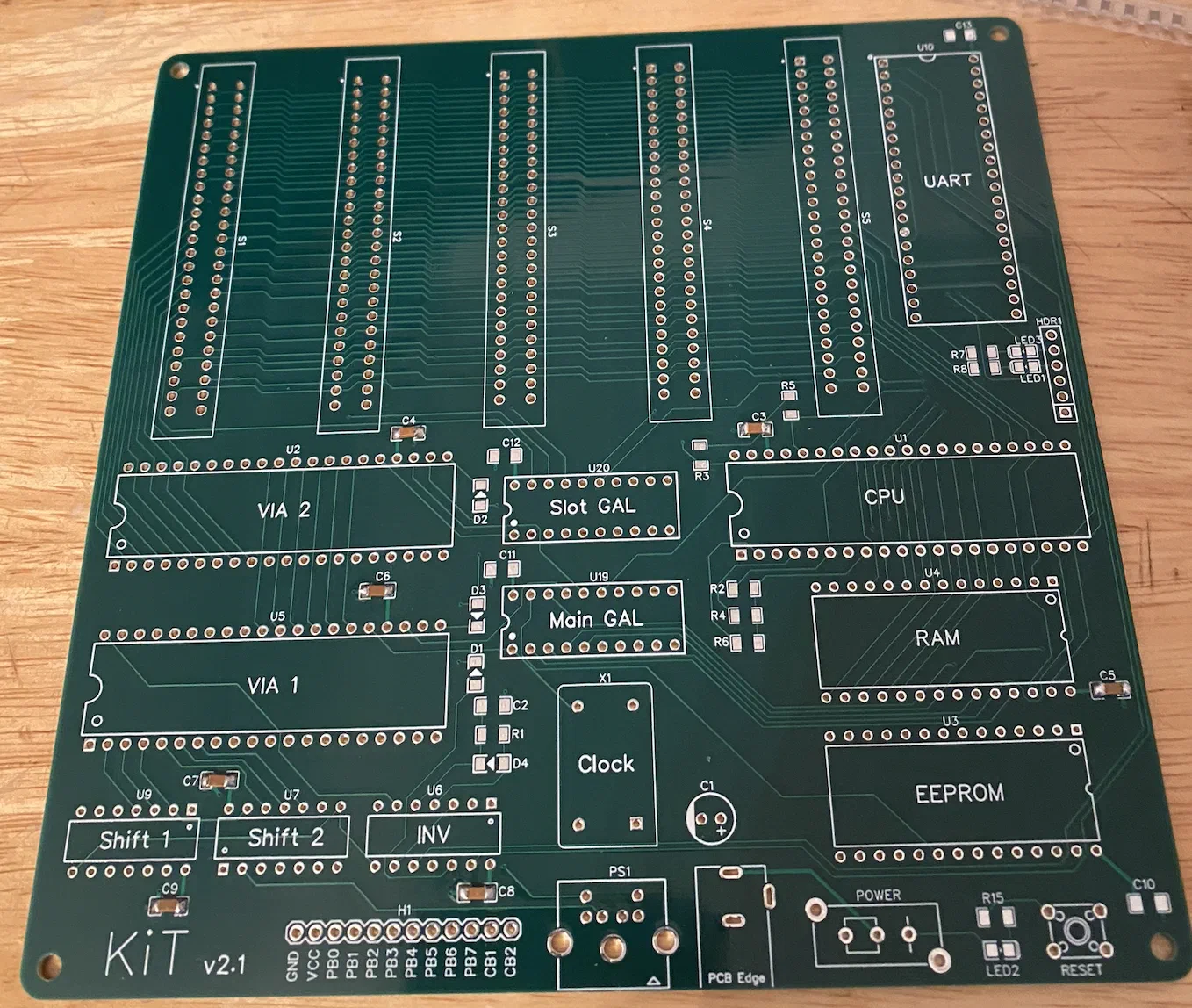
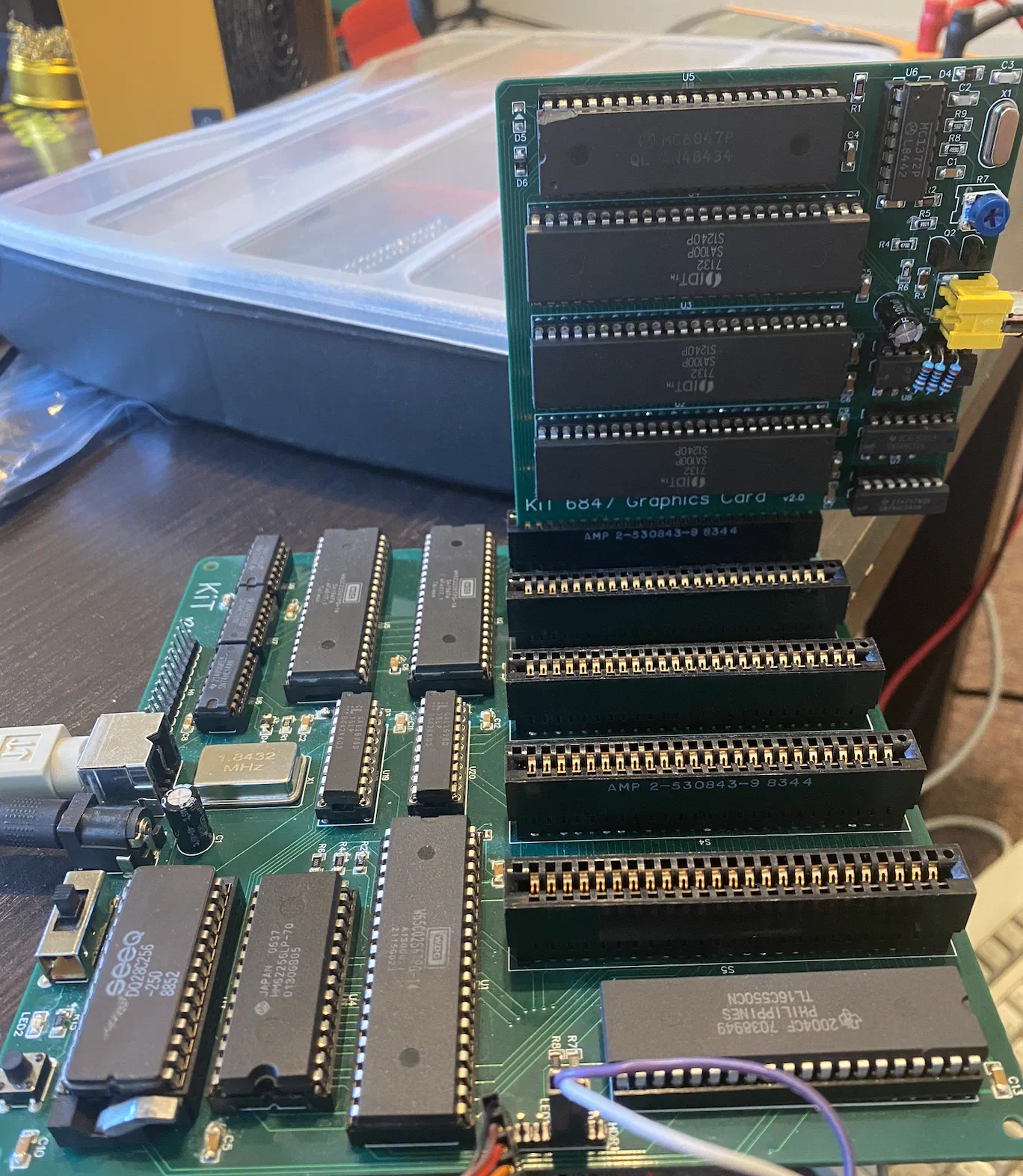
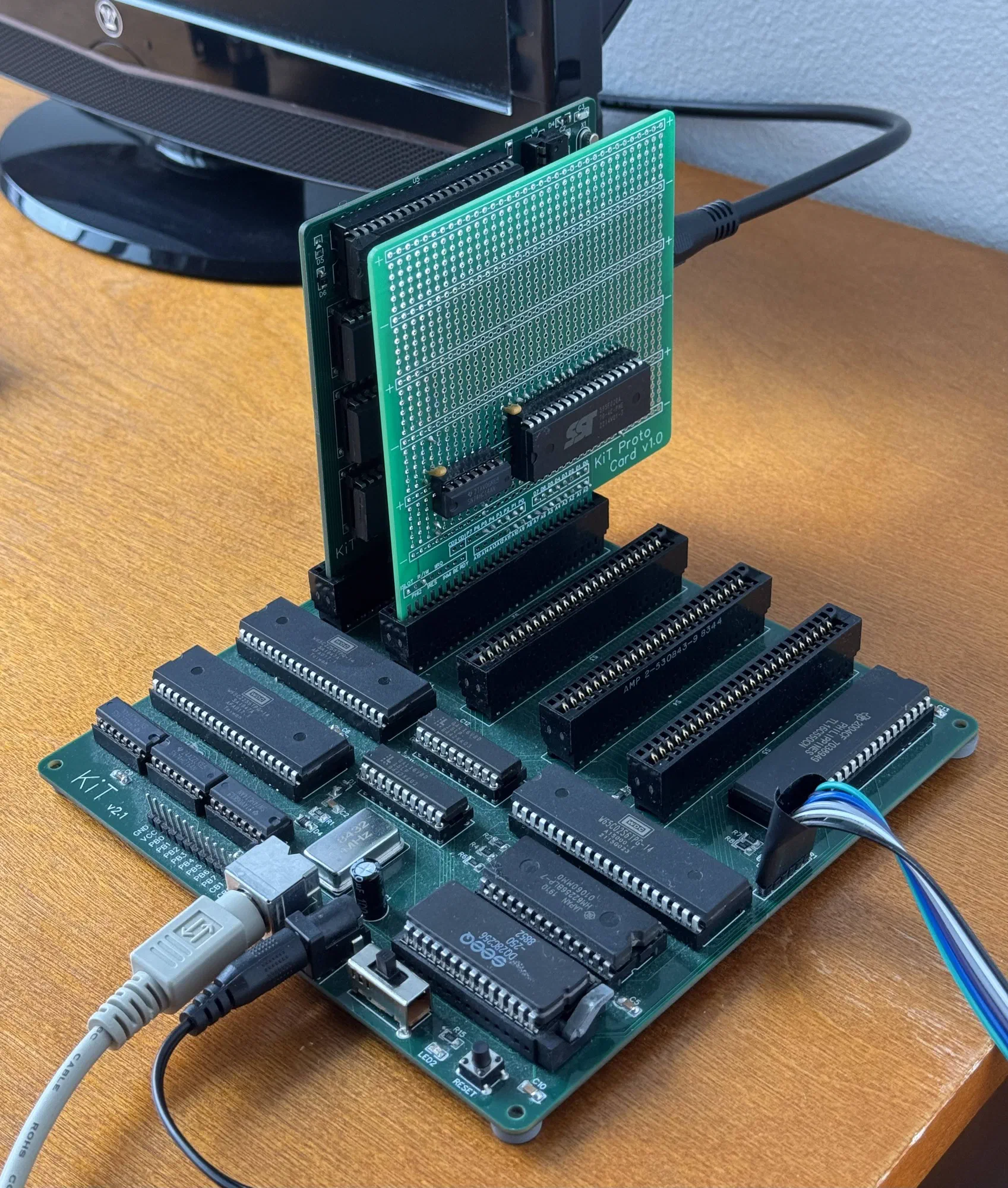
I wrote a KiT emulator in Java starting in 2023, which Claude ported to JavaScript. Try it out below!
How to
Click the screen and type a command at the > prompt, then press Enter:
fopens the file manager. Pick a program with the arrow keys and press Enter. Trysnake,life,mandelbrot,basic, orsid-play(pick a tune and press Enter; sound needs to be on).hlists the other commands, including an assembler (a) and a debugger (d).- Esc at the prompt resets the KiT. F1–F10 switch video modes.
KiT build log
- Part 1: Origins of the KiT 1
- Part 2: Keyboard input
- Part 3: Monitor program
- Part 4: Graphics
- Part 5: UART
- Part 6: KiT 2
- Part 7: Emulator
- Part 8: Flash drive
Musings on AI and projects like this
I started working on the KiT before LLMs/agents became really (really) good at programming. I loved knowing the complete inner workings of the computer: I did everything from laying out the wires to writing all the assembly software. It was difficult and time-consuming, which was part of the fun and the challenge. Completing a program (like Conway’s Game of Life or Tetris) felt like a huge accomplishment that I could be proud of.
I started using some AI assistance when I was working on my C compiler for the KiT, helping to make some of the tedious and repetitive parts of the program less tedious. At some point in 2026, I realized that agents had gotten so good they could massively improve the software library for the KiT. So I put Claude to work. It:
- Added SID emulation to kit-emu, which I never thought I’d be able to do since it would be so finicky and involved.
- Ported BASIC to the KiT, which I’d wanted to do for ages but never bothered because the assembly seemed unfriendly to me. It even modified BASIC to load and save programs to my flash drive.
- Wrote an assembler and disassembler/debugger for the KiT, both amazing programs to have but again would have been super involved for me to do myself.
- Wrote a wayyy better file browser than my primitive attempt I’d been using for years.
- Wrote a C64 SID file player so that I can port any Commodore 64 music file to hear on the KiT (totally amazing, let me see what my sound card was truly capable of). Again, I didn’t imagine this would be feasible for me to do.
- Ported kit-emu to run right here on my website!! This never even occurred to me before having access to coding agents.
- Helped me debug my WiFi card circuit diagram, finding issues before I even ordered components (it ended up working perfectly on the first try)
- Wrote all the WiFi communication code for the KiT and the ESP32.
Because of Claude, the KiT is massively more capable than it used to be. And I get to see my hardware achieving more of its potential. The C64 music player is a particular favorite, since I had barely put my SID card through its paces.
The only problem is that it has become trivially easy to do anything I can imagine with the KiT. I no longer can get the satisfaction of completing a challenging program. You might say “well why not just write the program yourself anyway, just don’t use AI.” But passion projects like this are fueled by motivation, and my motivation to spend hours wrangling some assembly is wrecked by knowing that I could have an agent write a dozen better, faster, more reliable, and more featureful programs in the time it would take me to even get started on one myself.
There is still satisfaction in dreaming up a program for the KiT and seeing it happen so fast. I do still take pride in my hardware, and in the parts of the software I contributed myself. But I do feel a bit sad that some of the glory and challenge is gone.
Building the WiFi card recently was nice, since a lot of my time just went into soldering and cutting wires, which was very meditative and not at all AI assisted. Maybe it’s time to do more hardware projects.